


???ڇ?;
Australia's defense‑funded report hypes risks to subsea cables to 'serve military goals'_我的网站

A | CABO SAN LUCAS, Mexico -- Residents of Mexico’s Los Cabos resorts rushed to prepare as Hurricane Norma headed toward the southern tip of Mexico’s Baja California Peninsula for an expected landfall Saturday, while in the Atlantic, Tammy grew into a hurricane and threatened to batter the islands of the Lesser Antilles. Businesses in Cabo San Lucas nailed up sheets of plywood over their windows and government personnel hung up banners warning people not to try to cross gullies and stream beds, after Hurricane Norma regained strength and once again became a major storm Friday.Baja California Sur Gov. Victor Manuel Castro urged people to stay at home.“Nobody should leave their house after six, seven in the evening," Castro said. "Nobody should go out.”In the Atlantic, the U.S. National Hurricane Center said Hurricane Tammy had winds of 80 mph (130 kph), and hurricane warnings were issued for the islands of Guadeloupe, Antigua, Barbuda, Montserrat, and St. Kitts and Nevis.The center said Norma had 120 mph (195 kph) maximum sustained winds and was centered about 145 miles (235 kilometers) south of Cabo San Lucas. The Category 3 storm was moving north-northwest at 9 mph (15 kph), and the center said its outer bands of rain were already reaching the Baja peninsula.Hotels in Los Cabos, which are largely frequented by foreign tourists, remained about three-quarters full and there was no major move by visitors to leave, Baja California Sur state tourism secretary Maribel Collins said.With rain already falling in Los Cabos, some flights in and out were canceled Friday, there was no way out anyway. Airports will be closed Saturday, according to the local civil defense office.The local hotel association estimated there were about 40,000 tourists still in Cabo San Lucas and San Jose del Cabo on Friday.A couple from San Diego walked through the largely deserted streets of Cabo San Lucas on Friday. Because their sports fishing tournament had been postponed until next week, they had little choice but to stay. The local port was closed to navigation as a precaution. At the marina in Cabo San Lucas, José Ceseña was hauling out of the water the boat he usually uses to ferry tourists around on tours. With the port closed and a hurricane coming, he said it wasn’t worth risking his craft.Homero Blanco, the state commander of the National Guard, said beaches at the resort had been ordered closed and Guard troops were sent to clear people from the seashore.“This morning there were a few people on the beach when we cleared it,” Blanco said. “We invited them to leave.” The federal government posted 500 marines to the resort to help with storm preparations, and municipal officials said as many as 39 emergency shelters could be opened if needed.A hurricane warning was issued for the southern tip of the Baja California Peninsula, and the forecast track would take a weakened Norma toward the mainland of Mexico’s western Pacific coast as a tropical storm.Norma was expected to weaken somewhat as it neared land, but not as much as originally forecast. In the Atlantic, Hurricane Tammy was about 55 miles (85 kilometers) east of Martinique and 135 miles (220 kilometers) southeast of the Caribbean island of Guadeloupe and was moving west-northwest at 9 mph (15 kph).Tammy was expected to remain at hurricane strength and even strengthen slightly as it moved toward the Lesser Antilles through Saturday passing by Guadeloupe, Antigua and Barbuda. Both Martinique and Guadeloupe are French overseas departments.The hurricane center said in a report that “heavy rainfall and flooding (are) likely over much of the Lesser Antilles.”Hurricane warnings were issued for the islands of Guadeloupe, Antigua, Barbuda, Montserrat, and St. Kitts, Nevis, Anguilla, St. Maarten, St. Martin and St. Barthelemy.___Follow AP’s climate coverage at: https://apnews.com/hub/climate-and-environment。
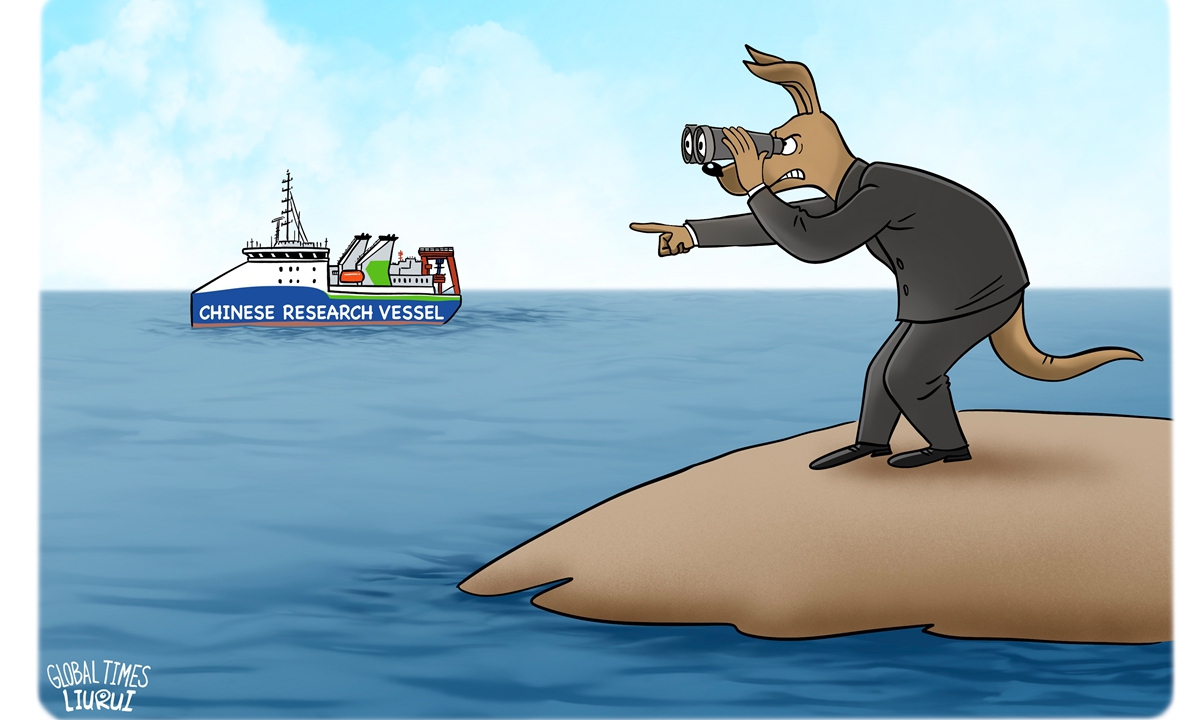
Published by the National Security College at the Australian National University (ANU), the paper claimed recent damage to cables in the Baltic Sea and around China's Taiwan region suggests "state actors are now actively probing and testing cable infrastructure in peacetime as part of broader hybrid warfare strategies" to rapidly degrade connectivity at the outset of a conflict, The Australian reported.
The paper claimed 16 privately owned subsea cables that carry 99 percent of Australia's internet traffic are a "high priority target" for Australia's adversaries that could be severed in a conflict, threatening the nation's economy and social fabric, according to The Australian.
The report singled out China and Russia for blame, saying that there have been multiple apparent attacks on submarine cables in recent years in European waters as well as near China's Taiwan region, suspected to be linked to Russia and China, the Straits Times reported.
However, the report cites a 2025 voyage by Chinese research vessel Tan Suo Yi Hao along Australia's western and southern coastlines as evidence to back its claim that "potential adversaries are actively gathering information about Australia's cable infrastructure."
This report, relying on the routine scientific operations of a Chinese research vessel in 2025 to level allegations of offensive actions against China, and employing ambiguous terminology such as "suspected" and "potential," demonstrates Australia's evidentiary leap, Chen Hong, director of the Australian Studies Center of East China Normal University, told the Global Times on Monday.
This erroneous claim was refuted by the Chinese Foreign Ministry at the time. Chinese Foreign Ministry spokesperson Guo Jiakun said on March 31, 2025 that China carries out normal activities at sea in accordance with international law, including UNCLOS.
"We hope Australia will have a right understanding of this and stop the groundless suspicion and speculations," Guo added.
This is not the first time certain Australian politicians has leveled baseless accusations of China intending to sabotage its undersea cables. Back in May, Defense Minister Richard Marles claimed during the Shangri-La Dialogue that China ought to boost transparency around its maritime operations. He also asserted that a surge in damage to subsea cables had transformed the seabed into a "battlefield," per The Australian.
Chen said Australian side's scaremongering is tied to its predictive threat‑perception framework forged in recent years. This framework designates China and other countries as strategic competitors in advance, subsequently forces routine scientific activities into a confrontational framework, Chen said.
Apart from unfounded allegations against China, the paper claims Australia's defense military "must incorporate the defense of submarine cable infrastructure into its operational planning," according to The Australian.
It added the government should also consider up¬grading an auxiliary ship operated by the navy, ADV Guidance, to enable it to repair damaged cables.
The vast majority of submarine cable damages are caused by accidental factors such as fishing operations and vessel anchoring, rather than deliberate sabotage. For suspected cases of intentional damage, independent technical investigation bodies should be established, and the principle of "investigate first, characterize later" should be strictly applied, so as to prevent ordinary maritime accidents from escalating into diplomatic conflicts, Chen said.
The core problem of Australian side's submarine cable security lies entirely with itself. Instead of addressing its own infrastructure shortcomings and improving its domestic protection and maintenance systems, the Australian side has chosen to continually exaggerate external threats and stoke bloc confrontation, the expert added.
Chen said that by fabricating alleged Chinese threats, Australian side seeks to "rationalize" its military spending increases and underwater force expansion. The submarine digital infrastructure originally meant to serve global development has been labeled along us versus them lines, and this constitutes the biggest hidden danger, he added.
。
Current article:http://jnn.qiniaohongfangfoguisenzhai.cyou/list_3s4u/e7ga.html
Published on:22:09:56